


The National Games have me (9) | Huang Lehe: The "general scheduling" of the race walking track makes every step stable
Article source:Huafa Sports 2026-01-31 16:58
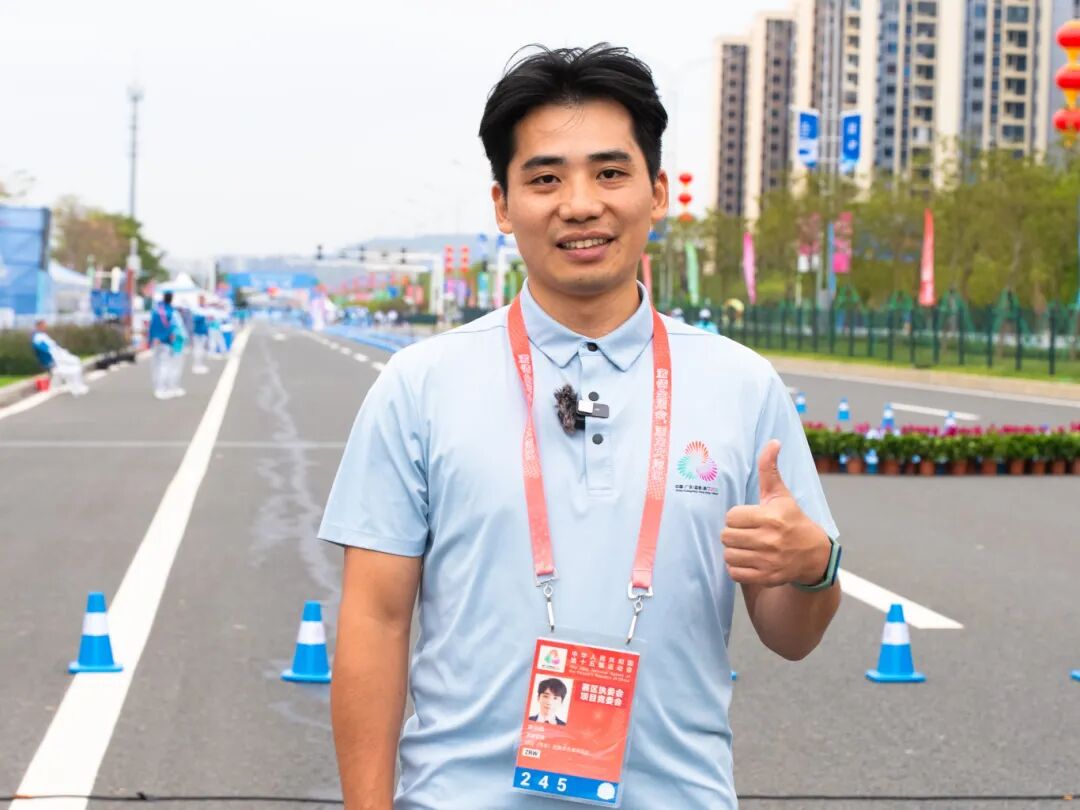
As the race walking event director of the 15th National Games of Huafa Sports, Huang Lehe led his team to survey the 1.7-kilometer track of Jinwan Road Track no less than 30 times. With the support of government departments at all levels, from competition organization to security and medical care, from traffic control to citizen services, the event experience of 114 athletes and 135 technical officials is included in his "overall list", "When the starting gun goes off and the athletes step on the track of Jinwan Road, all our efforts will be turned into help for them to move forward." At this moment, my team and I are fully prepared to present a 'safe, wonderful and complete' race walking feast for the national audience with zero mistake execution and efficient coordination, so that the Olympic spirit of 'faster, higher and stronger' will bloom in Zhuhai Jinwan."
18 hours for delivery, 3 hours for recovery
Organize the "mess" into a "smooth line"
"From November 10th to 12th and 15th to 17th, the 53-hour track will be closed, and 3 hotels and 12 offices must not be allowed to cross and knot." This is the first hard task Huang Lehe has received. Race walking competitions have strict requirements for the flatness of the field, timing accuracy, and referee execution. He strictly follows the World Athletics Federation competition specifications and sets up 8 functional areas (including FOP area, venue operation area, competition management area, etc.) in the construction of the track; Within 18 hours after the road closure, the equipment will be fully equipped to ensure the full commissioning of temporary facilities, timing and scoring systems, and video surveillance, so as to achieve the goal of delivering the venue for competition use 24 hours before the race and clearing the track 3 hours after the race to resume social use. At the same time, multiple rounds of verification were carried out for the arrival and departure information, concurrent arrangements, and sub-order books of 114 athletes (including 27 part-time athletes) in 22 provinces and cities to ensure the accuracy of competition information distribution. The safety of the event is the primary bottom line, and 10 types of emergency scenario drills such as extreme weather and intensive stampede are simulated in the comprehensive drill to ensure the "minute-level response" of emergency matters such as athletes' heat stroke treatment to equipment failure repair.
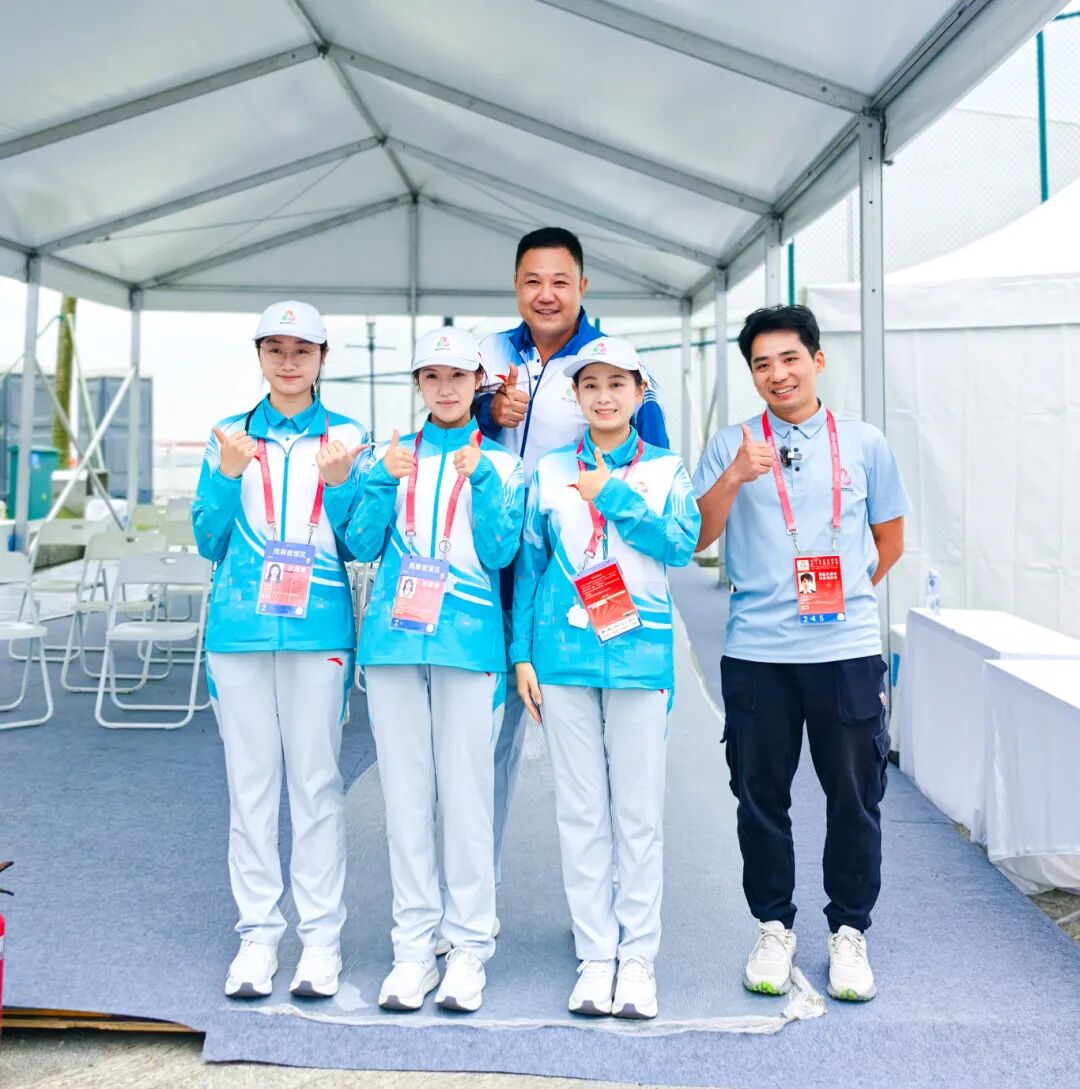
In order to make the connection of the three reception hotels zero mistakes, he soaked in the hotel for two consecutive days and followed the athletes' schedules: from the operation of the arrival and departure stations, to the check-in experience of each customer group, to the shuttle bus schedule, and then to the conference guarantee, catering guarantee and training guarantee of the customer group, running through the entire DRS daily operation schedule of the reception service. He immediately solicited local opinions, adjusted the shuttle bus route and communicated with the traffic management department on traffic security matters to ensure that the athletes could arrive at the venue smoothly and on time.
Dual-track schedule
Solve the problem of "leaving the meeting - checking in"
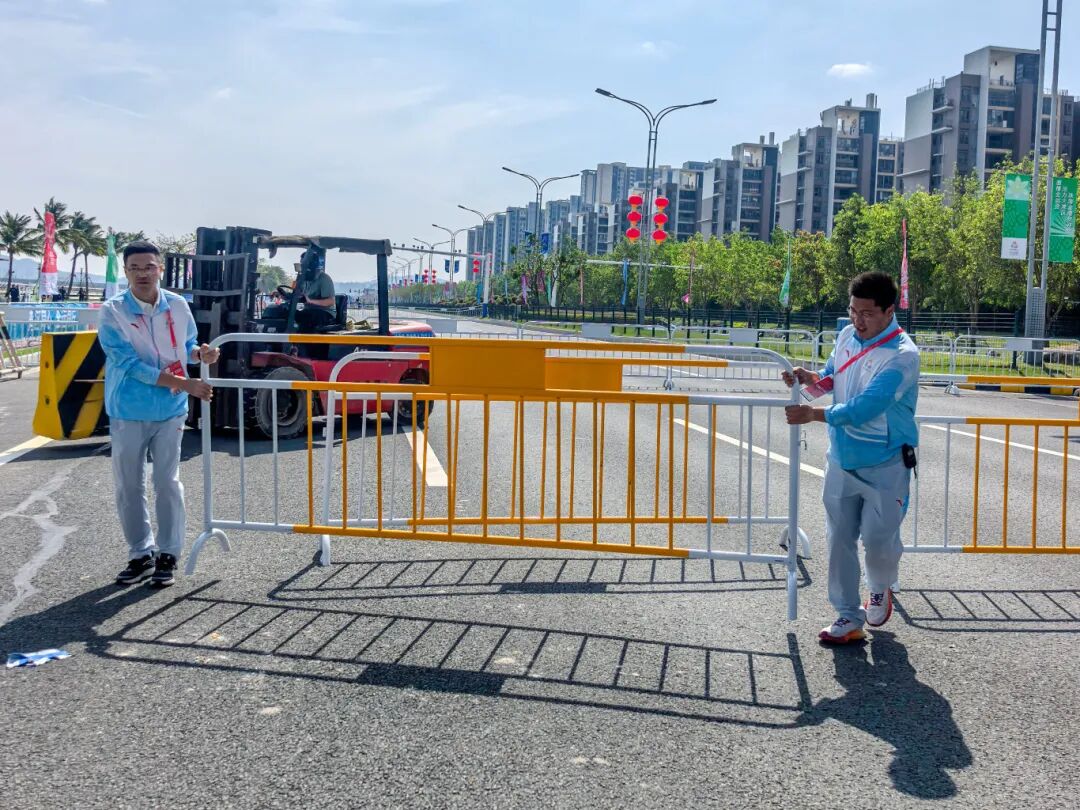
The individual competition ended on November 12, and the contestants left on the 13th; The mixed relay race starts on the 17th, and the relay runners will report on the 13th - they need to complete the "personnel replacement and venue change" within 48 hours, which is a "two-front battle" for Huang Lehe that doubles the pressure. He disassembled the daily work into 47 time nodes, from "7:00 athlete breakfast" and "9:30 track equipment inventory" to "14:00 timing system joint commissioning", all marked on the two-color schedule, red is the end of the individual competition, and blue is the preparation for the relay race.
The most tricky thing is the opening of the 750-meter temporary training ground, which must not only meet the warm-up needs of relay runners, but also not affect the recycling of individual competition equipment. Huang Lehe set the plan on the spot: complete the cleaning and transportation of individual competition equipment before 10 a.m., and simultaneously carry out relay track mark setting, security training, and broadcast equipment debugging from 10 a.m. to 12 p.m., and open to the contestants on time at 2 p.m. For two days, his mobile phone alarm clock rang every half hour, and he even stared at the progress table for eating, "just like knitting a sweater, the stitches must be dense, so that the thread will not be loose."
Millimeter level is more real
Engrave the "standard" into the track
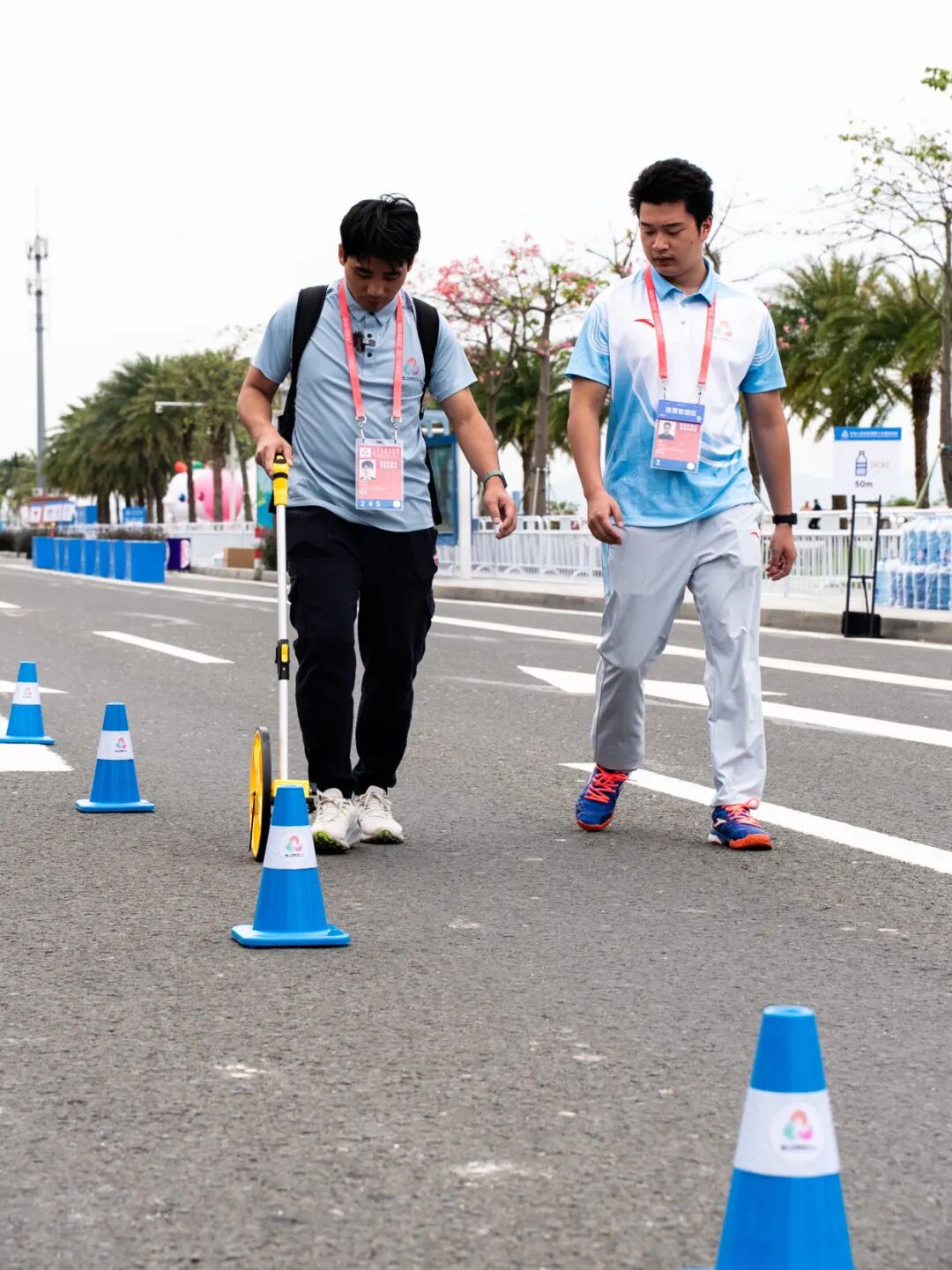
"The error of the race walking track cannot exceed 1 meter, and we must be within 0.5 meters." In order to comply with the standards of the World Athletics Federation, Huang Lehe led the team to measure the 1.7-kilometer track with a steel ruler at the millimeter level, making a mark every 100 meters, and repeatedly measuring it three times in a single lap. For the 42.195-kilometer mixed relay race, he was even more "picking bones in eggs", organizing the joint commissioning of referees, volunteers, competition teams and timing systems twice to simulate different scenarios such as rainy days and strong lights to ensure that "the gunshots are timed and the line is scored".
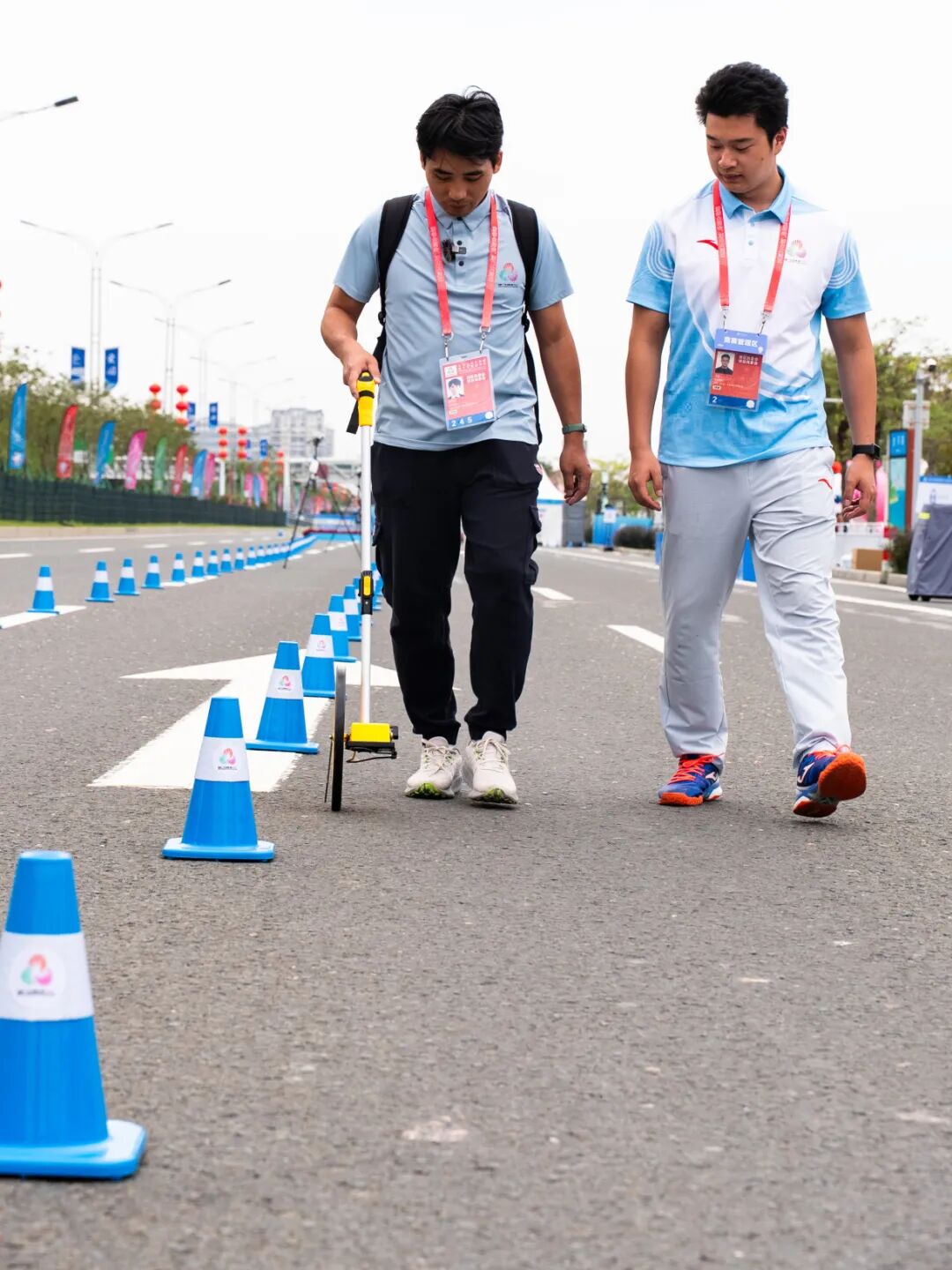
The equipment support is also not relaxed. 8 functional areas and 229 professional equipment, he checked the models one by one: temporary facilities must be supervised and accepted, resistant to level 8 winds, AEDs at medical points must be available within 30 seconds, and even athletes' supply station water cups are required to be "upside down and not spilled, easy to take". During an acceptance, he found that a lintel was not firmly fixed, and he immediately asked for all of them to be reinforced, "During the day, the wind by the river is strong, and the materials for temporary facilities and atmosphere should be stabilized, and if you do not do a good job of protection, it may affect the live broadcast effect and participation experience, and these details are the face of the event."
A plan in the wind and rain
Keep the "accident" out before the game
The weather in Zhuhai in November is like a "face-changing trick", with high temperatures and typhoons that may come to the door. Huang Lehe contacted the meteorological department in advance to upgrade radar monitoring, set up 6 medical points on the track, prepared enough ice packs and heatstroke prevention drugs, and also organized medical staff to carry out heatstroke disposal drills. In response to the typhoon, the race walking project has formulated a "three-level circuit breaker mechanism", strengthened 300 road flags and mascot models, and equipped the self-prepared supply station with a sun umbrella that can be quickly removed, "even if it rains heavily, the event must be safely connected."
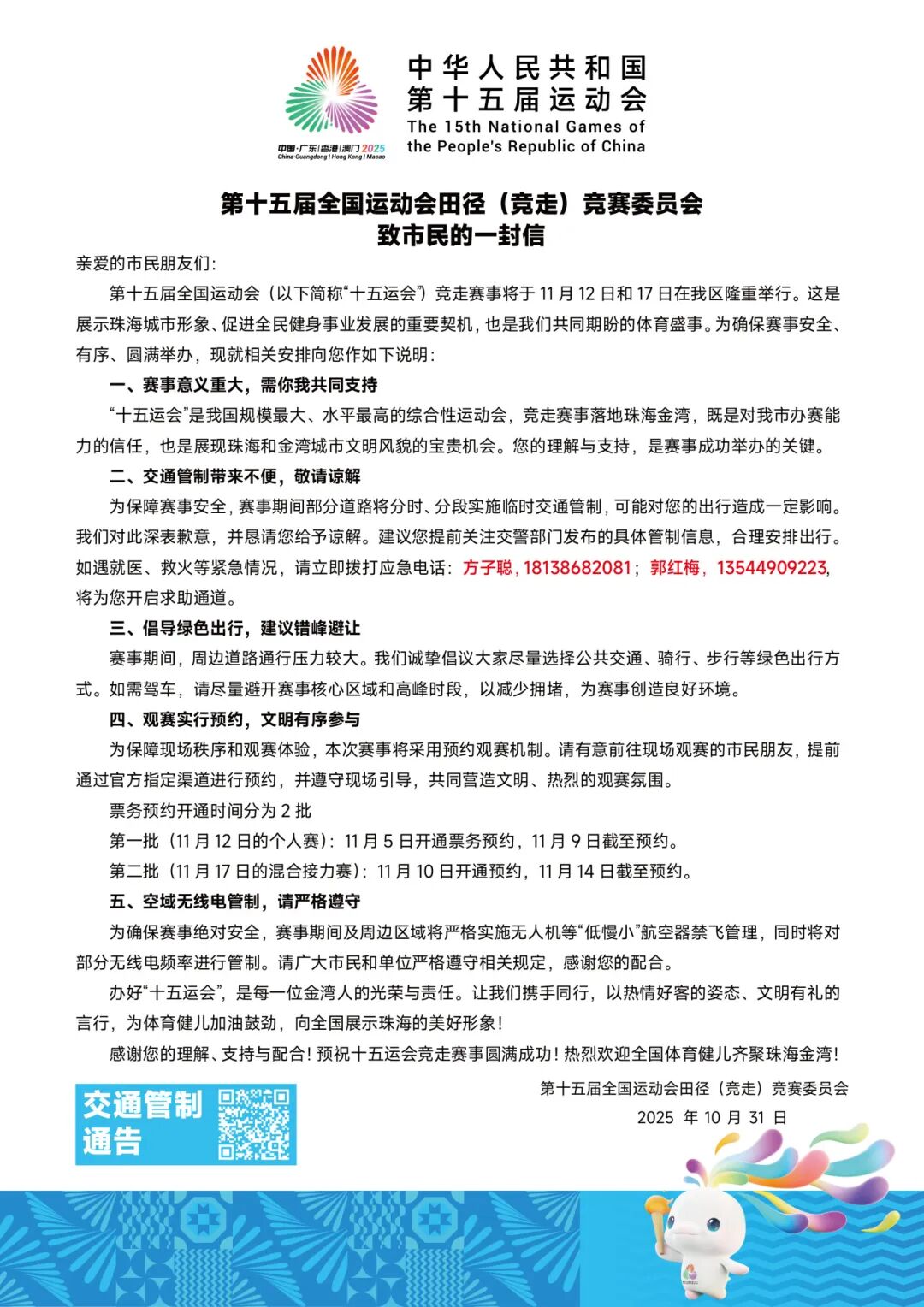
In order to reduce the impact of track closure on travel, based on the experience of the test race, he issued a "letter to the public" in advance to enter the home, publicize the detour route, and open free viewing places. At the same time, the territory organized the pruning of 410,000 square meters of greenery and the cleaning of 6 sanitary blind spots, "the event is not only a stage for athletes, but also a window to show the city, which must be understood and supported by the public."
From the track measurement in the morning light to the process review late at night, his "stability" is hidden in the precise scheduling of 53-hour lockdown, hidden in the dense dual-track schedule, and hidden in the millimeter-level truth. The Huafa people who participated in the National Games took professionalism as the needle and responsibility as the line, weaving every detail into the event guarantee network, so that the players could step steadily every step and leave no regrets in the excitement of the National Games.